
How to Maintain a Simple Daily Cash Book for a Small Shop in Sri Lanka
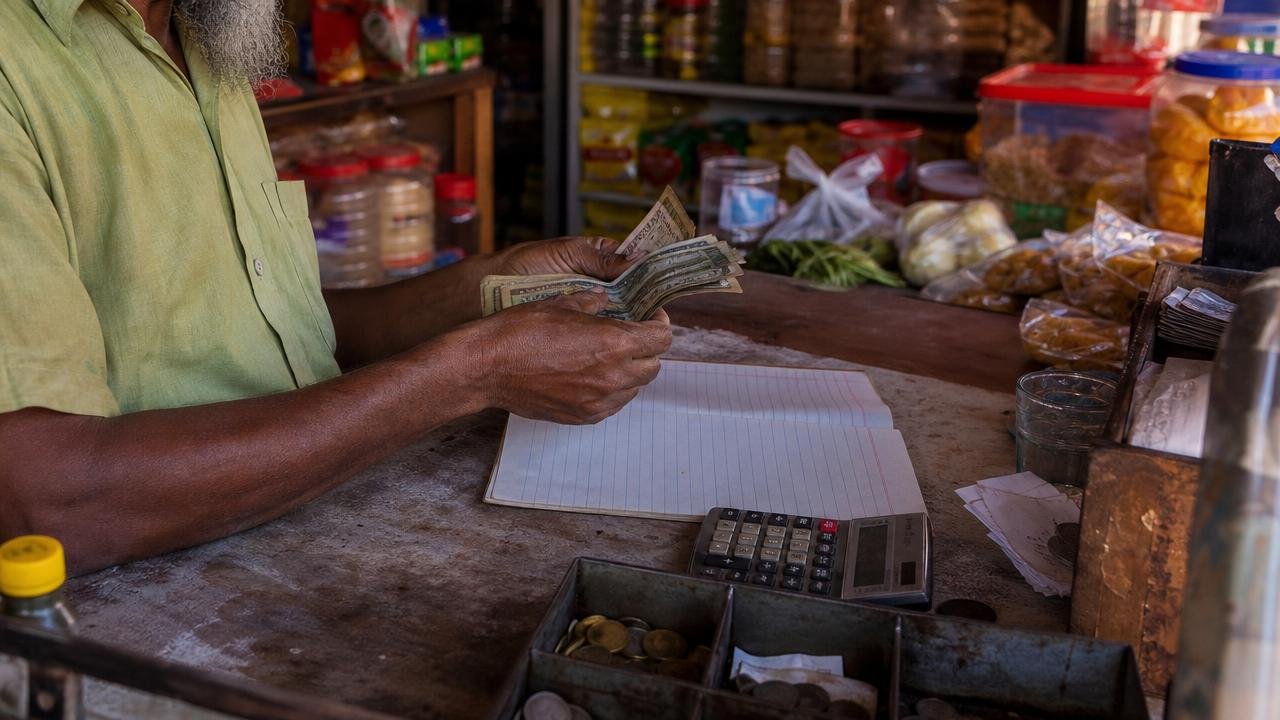
A daily cash book is a written record of every rupee that enters or leaves a shop’s cash drawer. For a small grocery, salon, kade, stationery shop, food outlet or home-based seller, it is the simplest way to answer three essential questions: how much cash came in today, what was paid out today, and how much cash should be on hand now.
You do not need accounting software to begin. A ruled exercise book, a calculator and consistent daily entries are enough. The key is to record transactions when they happen, keep business cash separate from household money, and check the physical cash against the book before closing.
Set up a cash book with clear columns
Use one double-page spread per day, or use a notebook with one table per date. Write the shop name and date at the top. Your table should show the source of each receipt or the reason for each payment—not merely a total.
| Date | Details | Cash in (Rs.) | Cash out (Rs.) | Balance (Rs.) |
|---|---|---|---|---|
| 8 November | Opening cash | — | — | 5,000 |
| 8 November | Counter sales | 18,450 | — | 23,450 |
| 8 November | Vegetable supplier | — | 6,200 | 17,250 |
| 8 November | Shop electricity payment | — | 1,500 | 15,750 |
| 8 November | Cash retained for next day | — | — | 15,750 |
The figures above are hypothetical examples, not typical costs or sales levels. The balance is a running total. Add each cash receipt to the previous balance; subtract each cash payment. A book with this structure makes errors easier to find than a page containing only scattered notes.
Keep these records separate
- Cash sales: Money paid at the counter, including cash delivery collections.
- Digital payments: Bank transfers, card payments or wallet payments. Record them in a separate “bank/digital” column or a separate page because the money is not in the cash drawer.
- Credit sales: Goods given to a customer who will pay later. Record the customer name and amount in a credit-sales list; do not enter it as cash received until it is actually collected.
- Purchases and expenses: Stock purchases, transport, packing materials, rent, utilities, wages and cleaning supplies.
- Owner transactions: Money the owner puts into the shop and money taken out for personal use. Label these clearly as “owner capital introduced” and “owner drawings”. They are not sales or shop expenses.
Follow a practical daily routine
A cash book works only when it reflects the real cash in the shop. Build a short routine around opening, trading hours and closing time.
At opening time
- Count the float—the notes and coins kept to give change.
- Enter it as opening cash. This is yesterday’s counted closing cash, not an estimate.
- Keep a fixed float where possible. For example, if a shop needs Rs. 5,000 for change, excess cash can be deposited or secured separately after closing. The suitable amount depends on the shop’s trade and security needs.
During the day
- Record every payment out immediately, or keep the receipt in a marked envelope and enter it before the next transaction.
- For cash sales, either record each sale or total sales from numbered bills at agreed intervals. The method should be consistent.
- Ask suppliers for receipts or write a small voucher yourself if no receipt is available. Include the date, supplier, purpose and amount.
- Do not take money from the till for tea, travel, groceries or household needs without recording it as an owner drawing or business expense, as appropriate.
At closing time
- Add the day’s cash-in entries and cash-out entries.
- Calculate the expected closing balance: opening cash + cash received − cash paid out.
- Count the actual notes and coins in the drawer.
- Compare the actual count with the expected balance. Write down any difference rather than changing figures to force a match.
- Sign or initial the page. If a staff member closes the shop, the owner should review it regularly.
If the expected cash is Rs. 15,750 but the drawer contains Rs. 15,550, record a Rs. 200 shortage and investigate it using bills, supplier receipts and the day’s sales record. A shortage may come from an incorrect change amount, a missing entry or a counting error. Recording it honestly is more useful than hiding it.
Use a separate page for credit and digital payments
Many small businesses become confused because their total sales are treated as cash in hand. Sales and cash are related, but they are not the same. A customer who promises to pay next week has created a credit sale, not cash. A QR or bank transfer payment may be received, but it belongs in the bank balance rather than the till.
Maintain a simple credit register alongside the cash book.
| Customer | Date | Goods / note | Amount due (Rs.) | Amount paid (Rs.) | Balance due (Rs.) |
|---|---|---|---|---|---|
| Example customer | 8 November | Household items | 2,400 | — | 2,400 |
| Example customer | 15 November | Cash collected | — | 2,400 | 0 |
When the Rs. 2,400 is collected, enter it in the cash book as “credit collection—Example customer”. This prevents the same sale from being counted twice.
For digital receipts, keep a daily list with the payer, amount, payment reference where available and whether it has appeared in the bank account. Enter transfers to the bank from the till as a cash-out entry, then record them in the bank record as money received. This creates a traceable path for the money.
Make the book useful for decisions, not only for counting cash
At the end of each week, total the main categories: cash sales, credit collections, stock purchases, transport, wages, rent, utility payments and owner drawings. This reveals patterns that a daily balance alone cannot show.
- If stock payments repeatedly exceed available cash, review buying quantities, supplier credit terms and slow-moving items.
- If customers’ unpaid balances keep growing, set a written limit for credit and follow up on due dates.
- If the owner regularly takes cash from the shop, record it separately so that shop performance is not overstated.
- If cash sales are strong but cash is missing, review change-giving procedures, sales bills and access to the cash drawer.
A cash book does not by itself show profit. Profit also depends on the cost of stock sold, unpaid bills, stock remaining, depreciation and other items that may not be paid on the same day. Still, accurate daily cash records provide the foundation for working out whether the shop is generating enough cash to pay suppliers and operating costs.
Simple controls that reduce mistakes
- Use one person to count cash and another to review it when the business has staff.
- Keep purchase receipts, utility bills and supplier invoices in date order.
- Number handwritten sales bills and account for missing numbers.
- Write corrections clearly; do not erase an original entry. Cross out the incorrect figure with one line, write the correction and initial it.
- Keep business cash in a drawer, cash box or bank account separate from household funds.
- Back up the notebook weekly by photographing completed pages or copying key totals into a spreadsheet.
For businesses growing beyond a few daily transactions, a spreadsheet can reproduce the same columns and automatically calculate balances. The discipline remains the same: every entry needs a date, description, amount and supporting record.
Owners planning a new side venture can also use the same habit from day one; this guide on starting an online business in Sri Lanka may help with thinking through initial costs separately from daily cash movement.
A closing checklist to keep beside the cash drawer
- Have all cash sales been recorded or totalled from bills?
- Have all supplier payments and small expenses been entered?
- Have owner withdrawals and cash introduced been labelled separately?
- Have credit sales been kept out of cash receipts until collection?
- Have digital payments been separated from physical cash?
- Does the counted cash match the book balance?
- Are receipts and vouchers filed for the day?
Completing this checklist every day takes far less time than reconstructing a week of missing transactions. A simple, honest cash book gives a small-shop owner a reliable daily view of cash, tighter control over expenses and a clearer basis for decisions.




Questions and comments
Be the first to leave a question or comment.