
Fake Bank Transfer Screenshots: How Sri Lankan Online Sellers Can Verify Payments
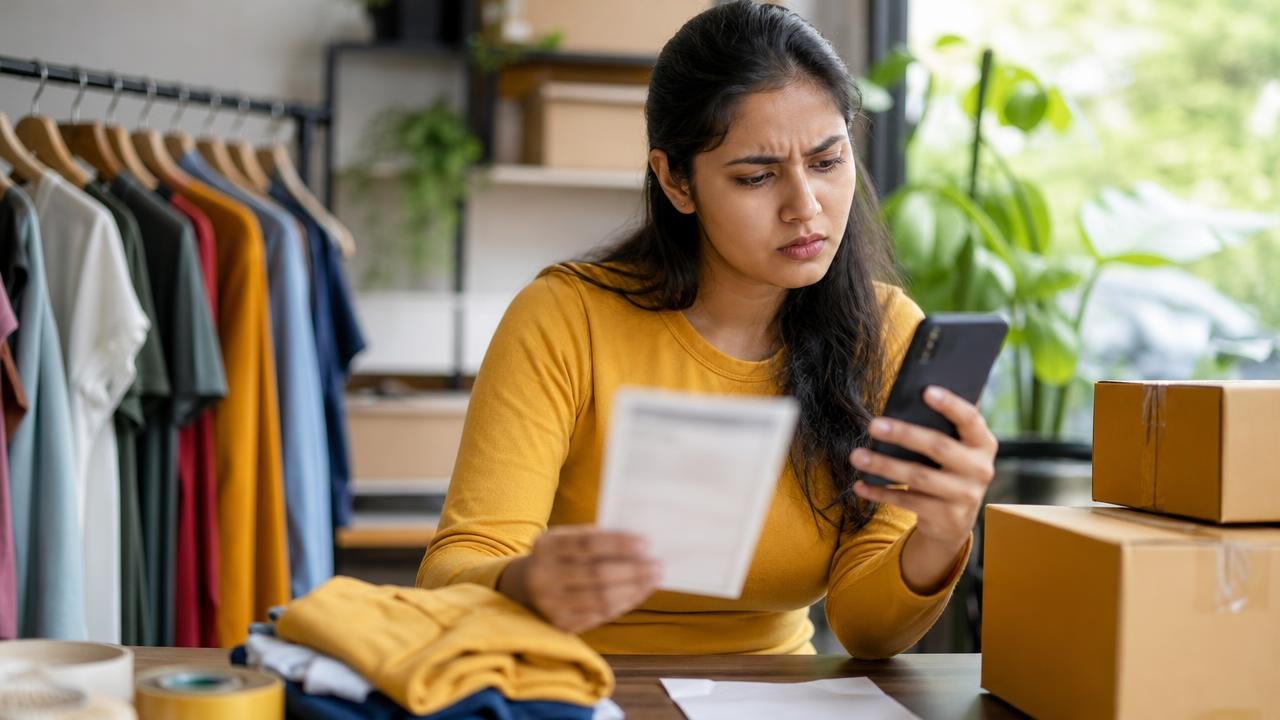
A bank-transfer screenshot is not proof that you have been paid. It may be edited, show a failed or pending transfer, belong to a different recipient, or be used to pressure you into releasing an order before funds arrive. For a Sri Lankan seller taking orders through Facebook, Instagram, WhatsApp or a simple online store, the safe rule is straightforward: dispatch, hand over, activate or book only after the money appears as a credited transaction in your own bank account.
That does not mean every customer who sends a screenshot is dishonest. A genuine buyer may send one to help you identify a payment. Treat it as a reference only—not as clearance to release goods. The Central Bank of Sri Lanka (CBSL) warns that forged documentation may be used in financial scams and advises customers to use real-time account notifications; Sri Lanka Police also advises the public to verify information through official channels. CBSL’s scam warning and the Police online-crime advisory support the same practical habit: verify before acting.
The verification rule: check your account, not the buyer’s screen
Use the bank app, internet banking, ATM, passbook or branch channel that you normally use. Look for a matching incoming credit in your account history or available balance. Confirm these details:
- Amount: it matches the invoice or agreed total, including delivery charges.
- Date and time: it is recent enough to relate to the order.
- Reference or narration: where shown, it helps link the credit to the customer or order number.
- Status in your own account: do not treat the buyer’s “successful”, “processing” or “pending” screen as confirmation.
If the funds have not appeared, the accurate message is: “Thank you. I will confirm your order as soon as the payment reflects in our account.” Do not debate whether the screenshot looks authentic. It is neither necessary nor reliable to make that judgement.
What not to accept as payment confirmation
- A cropped image, PDF or screen recording supplied by the buyer.
- An SMS forwarded by the buyer.
- A transaction reference alone.
- A promise that a transfer will “clear shortly”.
- A caller claiming to be from a bank, courier or payment service.
- A screen-share session in which someone asks you to open banking, scan a QR code or reveal an OTP.
Sri Lanka Police has specifically cautioned against scams involving malicious links, QR codes, fake banking sites and requests for banking credentials. Never send a PIN, password, card details or one-time password to “verify” that a customer has paid. Legitimate verification happens inside your own account or through your bank’s official support channel. Police guidance on emerging online financial scams says banks and reputable institutions will not ask for these confidential details through unofficial communications.
A practical workflow for Facebook, Instagram and WhatsApp orders
A written payment policy protects both the seller and genuine customer by setting the same expectation before money changes hands.
- Issue an order reference. For example: PL-1048. Ask the buyer to use it in the transfer reference if their bank allows it.
- Send only the payment details you need. State the account name, bank, account number and exact amount. Recheck the details before sending them.
- Set the release condition in writing. Say that the order is confirmed after the credit appears in your account.
- Check your account yourself. Do this before packing a high-value item, handing goods to a rider, sharing a digital code, or reserving stock.
- Record the confirmation. Note the order reference, amount, date, incoming transaction reference shown by your bank, delivery address and chat account used.
- Keep evidence securely. Retain the customer’s order message and your own account confirmation. Do not publish bank screenshots containing account balances or other customers’ details.
Customer message template: “Thank you for your payment. Please note that transfer screenshots are used only to help us locate a payment. Your order will be confirmed and dispatched once the payment is credited to our account. Please do not share any OTP, PIN or banking password with us.”
For cash-on-delivery orders, apply a separate process: confirm the recipient’s phone number and address, use a traceable delivery partner where practical, and reconcile remittances against your delivery records. For a small new venture, keeping this basic order trail is as important as pricing stock and delivery correctly; see Peak Lanka’s guide to the money needed to start an online business in Sri Lanka.
Red flags that justify pausing the order
One unusual detail is not conclusive. Several together should stop fulfilment until independent verification is complete.
| Red flag | Safe response |
|---|---|
| The buyer demands immediate dispatch because a rider is waiting. | Use the standard policy: release after the credit appears. |
| The screenshot is cropped, blurred, inconsistent, or omits the recipient details. | Do not attempt image forensics; wait for your own account record. |
| The buyer says the bank needs your OTP, PIN, card number or login to complete payment. | Stop the conversation. Never disclose these details. |
| A link, QR code or app is sent to “receive” funds. | Do not open, scan or install it. Check your bank app directly. |
| The buyer overpays and asks you to refund the difference urgently. | Do not refund based on a screenshot. First verify any actual incoming credit and seek bank guidance if the situation is unclear. |
Urgency is a common manipulation tactic. CBSL’s current consumer-awareness material describes scams as using fake websites, messages, calls or online accounts to obtain money or credentials, and advises people to verify, use official channels and report suspicious activity promptly. CBSL’s “Be Scam Proof” guidance is useful not only for buyers but for merchants receiving suspicious payment claims.
If you may have released an order on a fake payment
Act quickly, but avoid making accusations in public posts. Preserve the original chat, the buyer’s profile or phone number, the screenshot received, order details, delivery details, courier reference and a screenshot or statement from your own account showing that no matching credit arrived. Record dates and times before messages disappear.
- Contact your bank through the number in its official app, website, card or branch materials if there is any possibility that your account or credentials were exposed.
- Ask the courier or rider, if applicable, to pause delivery or return the parcel where operationally possible.
- Report suspected cyber-enabled fraud to the relevant authorities. Sri Lanka Police lists Computer Crime Investigation Division contact numbers in its public advisory, including 011-2300638, 011-2381375 and 011-2381058. See the Police advisory.
- For urgent online-safety assistance, Sri Lanka CERT lists hotline 101. Its reporting page notes that financial-fraud and social-media incidents should be submitted through the official incident-reporting route rather than ordinary email. Sri Lanka CERT’s incident guidance explains the distinction.
Recovery is not guaranteed, particularly once goods have been collected or funds have moved between accounts. The immediate aim is to stop further loss, preserve evidence and make reports with accurate records.
Make the rule visible before customers pay
Put the following notice in your Instagram highlights, Facebook page, WhatsApp catalogue, invoice and order-confirmation message:
“For your security and ours, orders are processed only after payment is credited to our bank account. A transfer screenshot is not payment confirmation. We will never ask for your PIN, password, card number or OTP.”
This is a modest control, but it removes the moment of uncertainty that fraudsters rely on. A seller who consistently checks the receiving account, keeps a clear order trail and refuses urgency-based exceptions is far less likely to lose stock to a fabricated bank-transfer screenshot.
Sources
- Beware of Financial Scams | Central Bank of Sri Lanka
- Public advised to remain vigilant and avoid becoming victims of online crimes | Sri Lanka Police
- Public Awareness on Emerging Online Financial Scams Using the Names of Reputable Institutions | Sri Lanka Police
- Be Scam Proof | Central Bank of Sri Lanka
- Report Incident | Sri Lanka CERT



Questions and comments
Be the first to leave a question or comment.