
Make Sri Lanka’s Tax System Simple Enough for Ordinary People
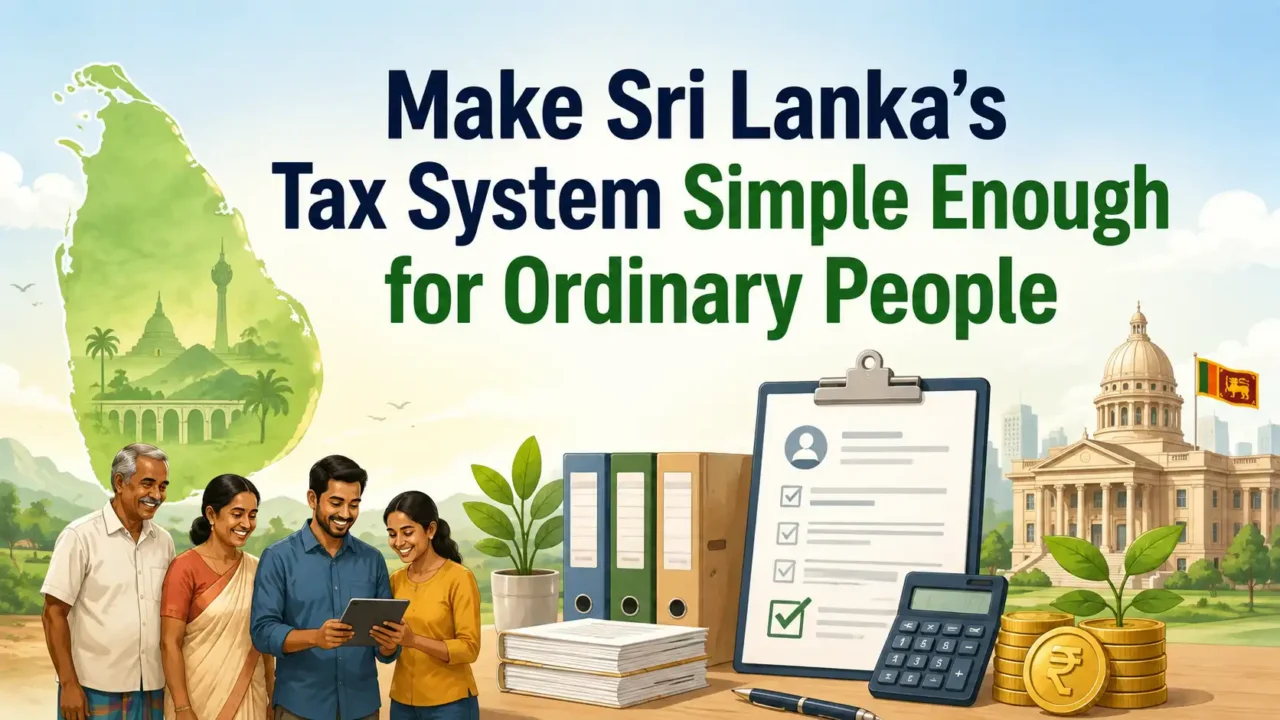
Sri Lanka needs more people and businesses to pay the taxes they legally owe. However, a complicated tax system discourages voluntary compliance, especially among ordinary employees, freelancers and small business owners.
The difficulty is not only the amount of tax. Many people struggle to understand whether they need to register, what income must be declared, which deductions are allowed, what documents are required and whether tax already deducted by an employer or bank is enough.
The Inland Revenue Department’s official forms page contains the individual income tax return, multiple schedules, a Statement of Assets and Liabilities, completion guides and online-submission instructions. A taxpayer may not need every document, but they must first understand which documents and rules apply to them.
Some recent changes have reduced the burden for certain employees. According to an IRD notice on income-tax changes, people whose only income is employment income fully covered by Advance Personal Income Tax may not need to maintain an income-tax file or submit a return, subject to the conditions stated in the notice.
However, the process can quickly become confusing for someone who also receives freelance income, rent, bank interest, investment income or earnings from a small business. Many people therefore pay an accountant or tax consultant to complete what should be a relatively simple personal submission. Others delay registration because they are afraid of making a mistake or facing penalties.
The World Bank’s Sri Lanka Public Finance Review has also highlighted weaknesses in tax administration, digital systems and reporting processes. This suggests that the problem is not simply a lack of willingness among taxpayers. The system itself creates unnecessary barriers.
Sri Lanka should introduce a guided, question-based tax platform. A person should be able to log in, review income already reported by employers and banks, answer a few understandable questions, add any missing income and see exactly how the final tax was calculated.
Instructions should be available in Sinhala, Tamil and English, using normal language instead of complicated legal terminology. First-time taxpayers should also be given a reasonable opportunity to correct genuine mistakes.
Simplifying taxation does not mean encouraging tax avoidance. It means making honest compliance easier. Sri Lanka cannot successfully expand its tax base while ordinary citizens feel that they need professional help simply to submit a basic personal tax return.


Exactly, old rules and too many steps make compliance feel like a side quest.
Exactly. If filing tax needs an accountant, a lawyer and two Panadols, small businesses will just stay informal. Keep it simple and people can focus on customers and cash flow, not forms.