
Would You Eat There? Make Every Restaurant Display Its Hygiene Grade
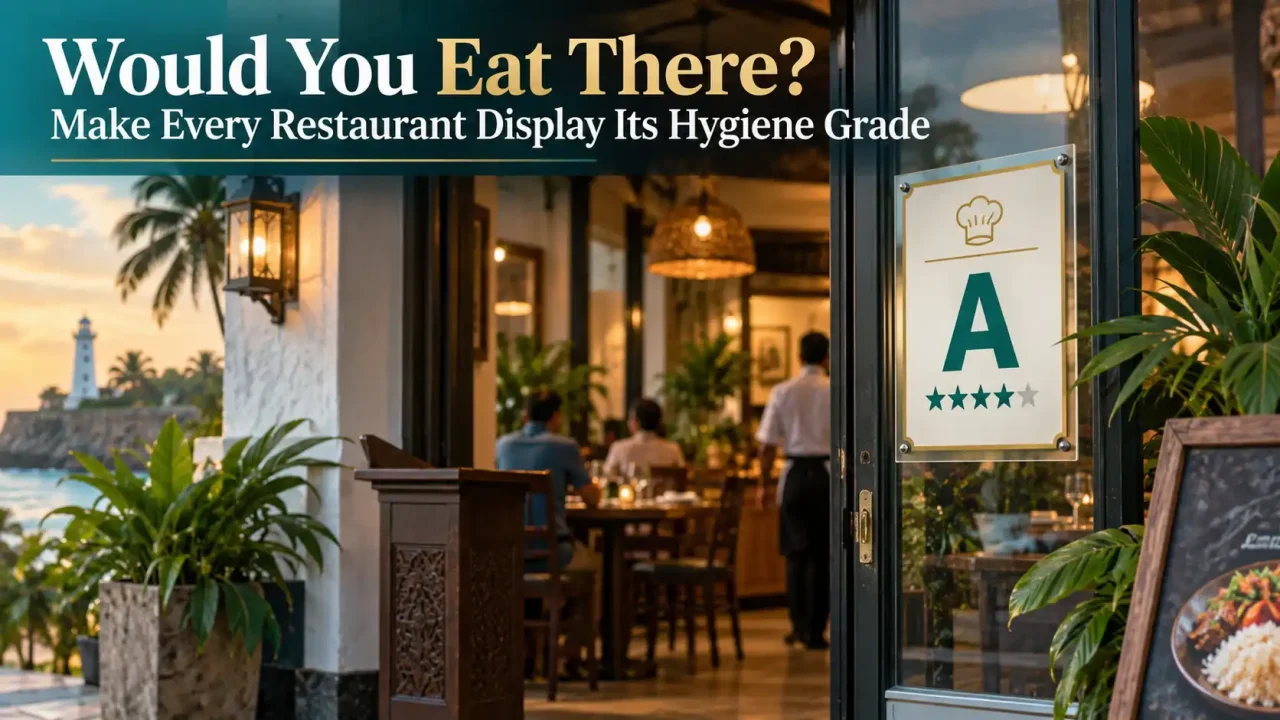
When choosing a restaurant in Sri Lanka, we can usually see the menu, prices, Google reviews and photos before eating there.
But one of the most important pieces of information is much harder to know:
How hygienic is the place where our food is being prepared?
Sri Lanka already has food-safety laws and inspections. Under the Food (Registration of Premises) Regulations 2019, food establishments ranging from small roadside restaurants to hotels are required to register with the relevant Food Authority. Registration involves inspection, and the registration certificate has to be displayed where customers can see it.
Sri Lanka’s Food Hygiene Regulations also cover areas such as food storage temperatures, cleanliness, pest control, food handling and staff hygiene.
The foundation already exists.
The next step should be making the result of the latest hygiene inspection simple and visible to ordinary customers.
Give every food business a clear hygiene grade
After an inspection, restaurants, cafés, bakeries, takeaway shops and other relevant food businesses could receive an easy-to-understand grade such as:
A – Good
B – Satisfactory
C – Improvement Required
D – Serious Improvement Required
Interestingly, Sri Lankan PHI guidance already contains a grading system for food-handling establishments, including A, B, C and D grades based on inspection scores.
The bigger opportunity is making those results consistently public.
A restaurant should have to display its current hygiene grade prominently near the entrance, together with the date of the inspection.
That date matters. An “A” awarded several years ago should not continue giving customers confidence if the business has not been inspected recently.
Let customers check it online too
The same information should be searchable through one national website or app.
Search a restaurant and see:
- Current hygiene grade
- Date of last inspection
- Previous grades
- Whether reinspection is pending
- Registration status
A QR code on the displayed certificate could take customers directly to the official record, preventing businesses from simply printing their own fake “A Grade” sticker.
There are already signs of movement in this direction: the PHI-PRO public portal currently describes an interactive service showing food-premises hygiene grades and inspection dates.
Instead of creating another completely separate IT system, Sri Lanka could build on existing inspection and digital systems and make public disclosure consistent nationwide.
A low score must not destroy a business forever
There is a legitimate downside.
A single poor inspection displayed publicly could seriously damage a small restaurant.
Businesses therefore need a fast reinspection process after correcting problems, as well as a formal appeal process when they believe an inspection was unfair.
Inspectors also gain more power when a grade directly affects a restaurant’s reputation and income. That increases the risk of corruption.
Inspector allocation, digital inspection records, supervisory audits and a record of grade changes would therefore be essential.
Other countries already do this
The UK’s Food Hygiene Rating Scheme gives food businesses ratings from 0 to 5. Customers can search ratings online, and businesses in Wales and Northern Ireland are legally required to display them prominently.
Sri Lanka does not need to copy that exact scale.
The important principle is much simpler:
Customers should know the hygiene record of a restaurant before they decide to eat there.
Good restaurants would benefit because hygiene becomes something they can prove rather than simply claim.
Poor-performing businesses would have a strong reason to improve.
And customers would finally have something more useful than appearances and online reviews when deciding:
Discuss this idea
Be the first to share your view.