
Metro Bus Sri Lanka: Routes, Fares, Timetables, LMT GO App & Complete Guide
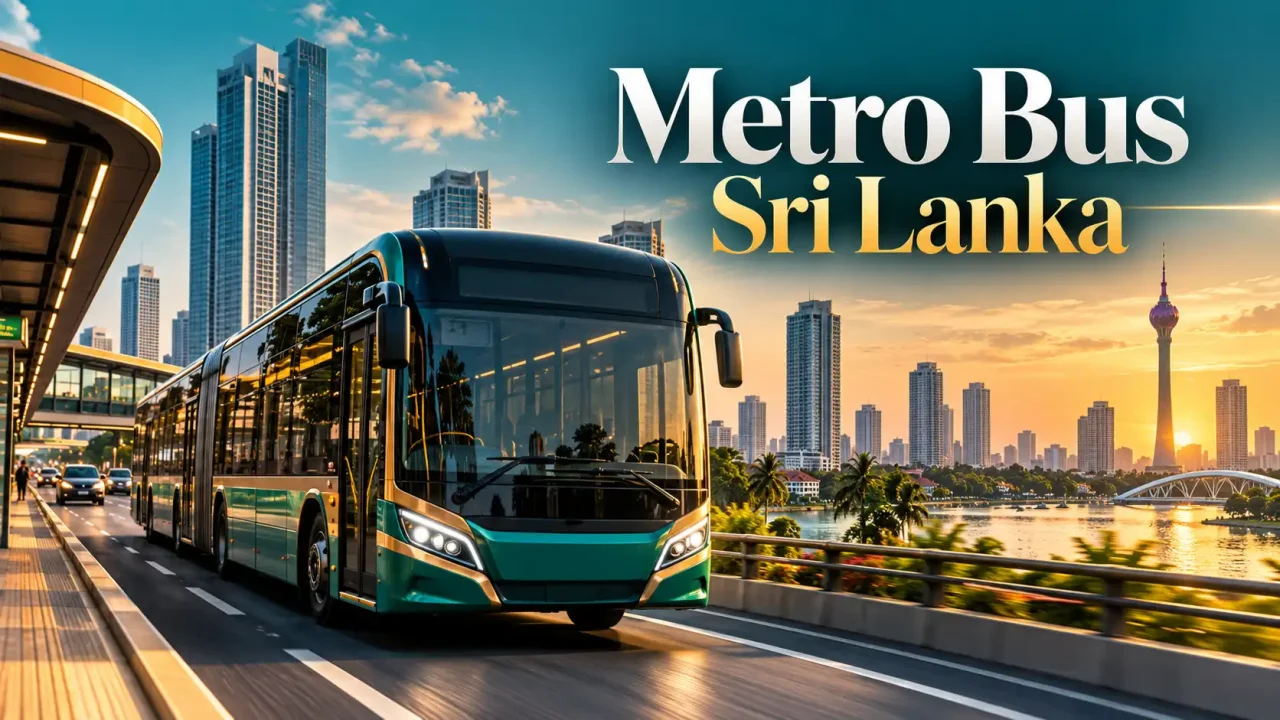
Sri Lanka’s Metro Bus service is now operating across several major routes in Colombo and the Western Province — but how exactly do you use it?
Where does the Metro Bus go?
How much does it cost?
Can you pay cash?
Is there an app?
Does it go to the airport?
Can wheelchair users travel on it?
And despite the name, is this actually a metro train?
Sri Lanka’s Metro Bus network expanded significantly on 29 September 2026, when five additional corridors joined the two routes that had already been operating.
The current network covers seven main corridors and uses modern air-conditioned, low-floor buses operated by Lanka Metro Transit.
This guide brings together the routes, fares, timetables, payment methods, LMT GO app, accessibility information and the most common questions passengers have about Metro Bus Sri Lanka.
Last updated: 10 October 2026
Metro Bus Sri Lanka: Quick Summary
| Detail | Current Information |
|---|---|
| Operator | Lanka Metro Transit (Pvt) Ltd |
| Main service area | Colombo and Western Province |
| Current corridors | 7 |
| Route codes | CM01, CM02, CM03, CM04, CM05, CM06, CM08 |
| Major expansion | 29 September 2026 |
| Fleet | Around 120+ buses reported across the network |
| Air conditioning | Yes |
| Low-floor access | Yes |
| Wheelchair ramps | Yes |
| Live GPS | Available through LMT GO |
| Digital ticketing | LMT Touch / mobile QR |
| Cash payment | Available according to Government information |
| Fare structure | Stage-based |
| Official app | LMT GO |
| Direct airport service | Not currently confirmed |
| Kandy / Galle / Jaffna | Future expansion announced |
The official Lanka Metro Transit website describes the fleet as air-conditioned, low-floor buses equipped with features such as wheelchair access, CCTV, passenger information systems and digital ticketing.
First: Metro Bus Is Not a Metro Train
The name can be confusing.
Metro Bus Sri Lanka is a bus network — not an underground metro, MRT or light-rail system.
The buses operate on normal roads.
That means they can still be affected by:
- Colombo traffic
- Accidents
- Road works
- Bad weather
- Peak-hour congestion
The difference from a conventional Sri Lankan bus is mainly the service model.
Metro Bus aims to provide:
- Modern buses
- Air conditioning
- Low-floor access
- Designated stops
- GPS tracking
- Timetable information
- Digital payments
- Better passenger information
- More structured operation
Peak Lanka has previously discussed why these types of improvements are important in Make Public Transport Good Enough That People Choose It Over Cars.
Who Operates Metro Bus Sri Lanka?
Metro Bus is operated by Lanka Metro Transit (Pvt) Ltd, commonly called LMT.
Despite having “Pvt Ltd” in its name, Lanka Metro Transit is a state-linked transport company.
Government Cabinet information states that Lanka Metro Transit was established as a subsidiary of the Sri Lanka Transport Board (SLTB) as part of efforts to modernise public transportation.
The service initially began with a smaller pilot fleet and expanded considerably during 2026.
Passengers can check official route and service information through:
How Big Is the Metro Bus Network?
The major expansion took place on 29 September 2026.
Government information reported that 112 additional Metro buses were deployed as part of the expansion.
Together with buses already operating under the programme, contemporary reports put the fleet at approximately 120+ buses.
The current network covers seven route codes:
CM01
CM02
CM03
CM04
CM05
CM06
CM08
Metro Bus Sri Lanka Routes
Here is a practical overview of the current network.
| Route | Main Corridor | Approximate Published Distance |
|---|---|---|
| CM01 | Makumbura ↔ Pettah | 23.3 km |
| CM02 | Millennium City / Athurugiriya ↔ Colombo Fort | 22.3 km |
| CM03 | Kadawatha ↔ Makumbura | 34.8 km |
| CM04 | Dematagoda ↔ Panadura | 28.7 km |
| CM05 | Battaramulla ↔ Ekala | 29.9 km |
| CM06 | Kollupitiya Circular | Around 14 km |
| CM08 | Southern corridor ↔ central Colombo | Route information currently varies |
The first six routes are relatively consistent across published information.
CM08 is less straightforward, so we explain that separately below.
CM01: Makumbura to Pettah
CM01 connects Makumbura Multimodal Centre with central Colombo.
Major areas along the published corridor include:
Makumbura → Kottawa → Pannipitiya → Thalawathugoda → Battaramulla → Rajagiriya → Borella → Town Hall → Maradana → Pettah
The route is approximately 23 km.
This could be particularly useful for people travelling from:
- Kottawa
- Pannipitiya
- Thalawathugoda
- Battaramulla
- Rajagiriya
towards central Colombo.
Makumbura is also an important transport interchange because passengers can connect with long-distance and expressway bus services from the Makumbura Multimodal Centre.
CM02: Millennium City / Athurugiriya to Colombo Fort
CM02 serves the rapidly growing Athurugiriya–Malabe corridor.
The published route covers areas such as:
Millennium City → Athurugiriya → Arangala → Malabe → Thalahena → Battaramulla → Sethsiripaya → Rajagiriya → Borella → Town Hall → Union Place → Colombo Fort
The route is approximately 22 km.
This could be useful for commuters living around:
- Athurugiriya
- Malabe
- Thalahena
- Battaramulla
who regularly travel towards Colombo.
CM03: Kadawatha to Makumbura
CM03 is one of the most interesting Metro routes because it connects two major suburban transport areas without requiring passengers to travel to Pettah first.
The approximately 35 km corridor includes areas such as:
Kadawatha → Mahara → Kiribathgoda → Kelaniya area → Orugodawatta → Dematagoda → Borella → Narahenpita → Nugegoda → Nawinna → Maharagama → Pannipitiya → Kottawa → Makumbura
The route also serves the broader Apeksha Hospital / Maharagama area.
For someone travelling between Kadawatha or Kiribathgoda and Maharagama or Kottawa, CM03 may remove the need for an unnecessary central Colombo transfer.
CM04: Dematagoda to Panadura
CM04 provides a north-to-south urban connection between Dematagoda and Panadura.
The route is approximately 29 km.
Published route information includes areas such as:
Dematagoda → Borella → Narahenpita → Colombo southern suburbs → Dehiwala → Moratuwa → Panadura
The exact designated stops should be checked through LMT GO before travelling.
This route could be particularly useful for people travelling along Colombo’s southern urban corridor.
CM05: Battaramulla to Ekala
CM05 connects Battaramulla with Ekala.
The route passes through several important Government-office, residential and commercial areas.
Major locations include:
Battaramulla → Sethsiripaya → Rajagiriya → Borella → Dematagoda → Peliyagoda → Wattala → Mahabage → Kandana → Ja-Ela → Ekala
The route is approximately 30 km.
CM05 is currently one of the Metro routes travelling closest towards the airport side of the Western Province.
However:
Ekala is not Bandaranaike International Airport.
Do not board CM05 assuming it will take you directly to the airport terminal.
CM06: Kollupitiya Circular Route
CM06 is different from the longer suburban Metro services.
It is a circular route serving central Colombo.
The published route includes areas such as:
Kollupitiya → Liberty → Public Library → Town Hall → Nelum Pokuna → Independence Square → Jawatta → Narahenpita → Havelock → Wellawatta → Bambalapitiya
The route is approximately 14 km.
This could be particularly useful for:
- Colombo office workers
- Students
- Tourists
- People visiting hospitals
- Government-office visitors
- Short trips within Colombo
CM06 isn’t primarily designed to bring passengers into Colombo from distant suburbs.
Instead, it provides connectivity within central Colombo itself.
CM08: Kahathuduwa, Kesbewa, Colombo Fort or Pettah?
CM08 is currently the most confusing Metro route.
Earlier route announcements described CM08 as:
Kesbewa ↔ Pettah
However, reports published when the expanded network launched described it as:
Kahathuduwa ↔ Colombo Fort
Recent information associated with the LMT GO system has also referred to the Kahathuduwa–Colombo Fort alignment.
The southern section generally serves areas around:
Kahathuduwa / Kesbewa → Piliyandala → Werahera → Boralesgamuwa → Kohuwala / surrounding areas → central Colombo
Because the route appears to have changed or been extended between planning and actual operation, passengers should check LMT GO before travelling on CM08.
Peak Lanka will update this section when Lanka Metro Transit publishes fully consistent permanent route information.
Why Is There No CM07?
You may notice that the route codes go:
CM01
CM02
CM03
CM04
CM05
CM06
CM08
There is currently no publicly listed operating CM07 in the seven-corridor network.
We couldn’t find a reliable official explanation for why CM07 is absent.
Therefore, don’t assume CM08 is a typo.
Use the route number shown by Lanka Metro Transit or LMT GO.
Where Can You Find the Metro Bus Timetable?
The best place to check current timetable information is the LMT GO app.
Lanka Metro Transit says LMT GO provides access to features including:
- Routes
- Timetables
- Bus stops
- Live bus location
- Arrival information
- Journey planning
- Digital ticketing functions
You can also find official information through the Lanka Metro Transit website.
Why Doesn’t Peak Lanka Publish a Full Fixed Timetable Here?
Because this page is intended to remain useful.
Bus schedules can change.
Traffic conditions also affect actual arrival times.
A timetable copied into this article today could become inaccurate within weeks or months.
For an actual journey, always check:
LMT GO
on the day you’re travelling.
How Often Do Metro Buses Run?
Lanka Metro Transit has promoted approximately 5–10 minute peak-hour frequencies on high-frequency corridors.
However, don’t interpret that as a guarantee that every Metro bus arrives every five minutes throughout the entire day.
Actual frequency can depend on:
- Route
- Time
- Traffic
- Passenger demand
- Bus availability
- Operational changes
Use LMT GO to check the next available bus.
What Does “Load and Go” Mean?
Lanka Metro Transit describes its service as using a Load and Go operating model.
The idea is that buses shouldn’t remain unnecessarily parked at stops waiting to collect additional passengers.
Once normal boarding is completed, the bus continues its journey.
This is intended to reduce the lengthy waiting behaviour sometimes seen in Sri Lankan conventional bus services.
For passengers, it means one thing:
Don’t arrive at the stop at the exact final minute.
Try to arrive a little earlier.
How Much Is the Metro Bus Fare?
Metro Bus uses a stage-based fare system.
That means your fare depends on how far you travel.
However, one of the weaknesses of the current public information is that there isn’t yet a simple, stable official webpage displaying every fare between every pair of Metro stops.
Earlier reported examples have included approximately:
Makumbura → Colombo: around Rs. 250
and higher fares on longer routes.
But these should not be treated as permanent network-wide prices.
How Should You Check Your Fare?
The safest approach is:
- Open LMT GO.
- Select your route or journey.
- Check the current fare information where available.
- Confirm the fare on board if necessary.
Peak Lanka will update this page if Lanka Metro Transit publishes a complete permanent fare table.
Can You Pay Cash on Metro Bus?
Yes.
Government information about the service indicates that cash payments remain available when required.
That’s important.
Not everyone has:
- A smartphone
- Mobile data
- A Metro transport card
- A digital wallet
If you’re using Metro Bus for the first time, carrying some small-denomination cash is sensible.
What Is LMT Touch?
LMT Touch is the contactless transport-card system promoted by Lanka Metro Transit.
Passengers can use the card as part of LMT’s cashless ticketing system.
Instead of paying the conductor using physical cash, passengers can use a supported contactless payment method.
As the Metro network develops, LMT Touch could become increasingly important for regular commuters.
Can You Pay Using QR?
Yes.
Lanka Metro Transit also promotes mobile QR ticketing through its digital platform.
This means Metro Bus is designed to support a combination of:
- Cash
- LMT Touch
- Mobile QR
The long-term advantage of digital ticketing isn’t simply convenience.
It can also make public transport more transparent by providing better information about passenger demand, routes and ticket revenue.
Can You Pay Directly With Visa or Mastercard?
Bank-card payment has appeared in demonstrations and reporting around Sri Lanka’s public transport digitalisation.
However, the current Lanka Metro Transit passenger information primarily promotes:
LMT Touch
and:
Mobile QR
Therefore, don’t depend on your ordinary Visa or Mastercard as your only payment method unless the operator confirms that it is supported on your particular journey.
What Is the LMT GO App?
LMT GO is the official passenger application for Lanka Metro Transit.
It is one of the most important parts of the Metro Bus system.
The app is designed to provide information such as:
- Live bus locations
- Nearby stops
- Route information
- Timetables
- Estimated arrival information
- Journey planning
- Digital ticketing
- Passenger information
The official app can be accessed through the Lanka Metro Transit website.
Can You Track Metro Buses Live?
Yes.
Live GPS tracking is one of Metro Bus’s key features.
Instead of standing at the bus stop wondering:
“Is the bus five minutes away or forty minutes away?”
passengers should be able to use LMT GO to see the location of the service.
This could become one of the most important improvements in Sri Lankan public transport.
A modern bus is useful.
But knowing when the bus will arrive can be even more useful.
Do Metro Buses Stop Anywhere You Ask?
No.
Metro Bus is intended to operate using designated Metro stops.
Don’t assume the driver will stop anywhere along the road simply because you wave at the bus.
Use LMT GO or the official route information to identify the correct stop.
Fixed stops can improve:
- Journey time
- Safety
- Schedule reliability
- Traffic flow
but they also mean passengers need to know where their nearest Metro stop is located.
Are Metro Buses Air-Conditioned?
Yes.
Air conditioning is one of the major features of the Metro fleet.
This could be particularly important for daily commuters who might otherwise prefer travelling by car or ride-hailing service because of comfort.
Are Metro Buses Wheelchair Accessible?
Yes.
Accessibility is one of the major improvements compared with many traditional Sri Lankan buses.
The Metro fleet includes features such as:
- Low-floor boarding
- Wheelchair ramps
- Priority seating
- Passenger information systems
- Audio information
- Visual next-stop information
This can make travel easier for:
- Wheelchair users
- Senior citizens
- Passengers with mobility difficulties
- Parents travelling with young children
However, genuine accessibility also depends on the quality of the bus stop and surrounding pavement, not only the vehicle itself.
Are Announcements Available in Sinhala, Tamil and English?
Lanka Metro Transit says its passenger-information systems provide information in:
Sinhala
Tamil
English
Audio and visual next-stop information can be particularly useful for:
- Tourists
- People unfamiliar with Colombo
- Elderly passengers
- Passengers with disabilities
It also reduces the need to repeatedly ask the conductor when to get off.
Do Metro Buses Have Wi-Fi?
Lanka Metro Transit has promoted free Wi-Fi as one of the features of the modern fleet.
However, don’t depend on bus Wi-Fi for something essential.
Mobile connectivity and onboard equipment can occasionally fail.
If you need your phone for:
- Payment
- Navigation
- Calling someone
- Ride-hailing after the bus trip
keep enough mobile data and battery available.
Do Metro Buses Have USB Charging?
USB charging has also been promoted as a Metro Bus feature.
That can be useful during longer journeys.
But again, don’t board with a 1% battery expecting every USB port on every bus to work perfectly.
Carry enough charge for your journey when possible.
Do Metro Buses Have CCTV?
Yes.
CCTV and other onboard monitoring systems form part of the modern Metro Bus specification.
This can improve:
- Passenger security
- Incident investigation
- Driver accountability
- Operational monitoring
Passengers should still use normal public-transport precautions and keep phones, bags and wallets secure.
Can Tourists Use Metro Bus?
Yes.
Metro Bus is normal public passenger transport and isn’t restricted to Sri Lankan citizens.
In fact, features such as:
- English passenger information
- GPS journey planning
- Designated stops
- Route numbers
can potentially make Metro Bus easier for tourists to understand than traditional Sri Lankan buses.
CM06, the Kollupitiya Circular route, may be particularly useful to visitors staying around central Colombo.
Does Metro Bus Go to Colombo Airport?
There is currently no confirmed direct Metro Bus route terminating at Bandaranaike International Airport.
CM05 travels towards:
Ja-Ela / Ekala
but this is not the airport terminal.
Therefore, don’t board CM05 expecting a direct ride to BIA.
A direct airport connection would make sense as the network expands, but passengers should wait for an official route announcement.
Does Metro Bus Go to Makumbura?
Yes.
Makumbura is one of the most important locations in the current network.
CM01 connects Makumbura with central Colombo.
CM03 connects Makumbura with Kadawatha.
This also allows passengers to connect with long-distance and expressway services available from the Makumbura Multimodal Centre.
Does Metro Bus Go to Maharagama?
Yes.
CM03 passes through the broader Maharagama area while travelling between Kadawatha and Makumbura.
It also serves the area around Apeksha Hospital.
Check LMT GO for the closest current stop before travelling for a hospital appointment.
Does Metro Bus Go to Battaramulla?
Yes.
Battaramulla is one of the most important areas in the Metro Bus network.
Several routes pass through or connect with the broader:
Battaramulla → Sethsiripaya → Rajagiriya
Government-office corridor.
CM05 specifically connects Battaramulla with Ekala.
Does Metro Bus Go to Panadura?
Yes.
CM04 connects Dematagoda and Panadura.
Does Metro Bus Go to Kadawatha?
Yes.
CM03 connects Kadawatha with Makumbura.
Kadawatha also has a Metro Bus depot supporting operations.
Does Metro Bus Go to Kandy?
Not yet as part of the current confirmed Western Province network.
The Government has announced plans to expand modern Metro-style services beyond Colombo and the Western Province.
Cities mentioned for future expansion include:
- Kandy
- Galle
- Jaffna
However, passengers should distinguish between:
a planned future Metro route
and:
a route that is actually operating today.
Check Lanka Metro Transit before planning a journey.
Is Metro Bus Coming to Galle?
Galle has been mentioned as one of the cities targeted for future expansion.
However, don’t assume a complete Galle Metro Bus service is operating simply because future plans have been announced.
Wait for an official route launch and timetable.
Is Metro Bus Coming to Jaffna?
Jaffna has also been mentioned in future expansion plans.
Again, route details and launch dates should be confirmed through official Lanka Metro Transit or Government announcements.
Will Private Buses Eventually Join the Metro System?
Government officials have discussed the possibility of allowing private-sector operators to participate under agreements or standards associated with Lanka Metro Transit.
This could become very important.
Sri Lanka cannot transform public transport simply by operating a small number of premium Government buses.
A larger long-term improvement would involve common standards for:
- GPS
- Digital ticketing
- Timetables
- Passenger information
- Accessibility
- Complaints
- Driver behaviour
- Safety
Peak Lanka’s proposal Put a QR Code in Every Bus — Report the Problem and Track What Happens Next explores one way technology could improve accountability across the wider bus system.
Metro Bus vs Normal Sri Lankan Bus
| Feature | Metro Bus | Typical Conventional Bus |
|---|---|---|
| Air conditioning | Yes | Usually no |
| Low-floor boarding | Yes | Usually no |
| Wheelchair ramp | Yes | Usually no |
| Live GPS | Major feature | Limited / varies |
| Passenger app | LMT GO | Usually unavailable |
| Designated stops | Yes | Depends on service |
| Digital ticketing | Yes | Limited |
| CCTV | Yes | Not universal |
| Route coverage | Currently limited | Extensive nationwide |
| Traffic impact | Still affected | Still affected |
The biggest advantage of conventional buses remains:
coverage.
Sri Lanka already has an enormous bus network.
Metro Bus currently covers only selected corridors.
So Metro Bus is useful only if its route actually matches where you need to travel.
Metro Bus vs Driving a Car
A private vehicle still offers advantages:
- Door-to-door transport
- Privacy
- Flexible departure times
- Easier luggage transport
- More flexibility outside Metro routes
Metro Bus potentially offers:
- Lower travel cost
- No parking problem
- No driving stress
- Air conditioning
- Better predictability
- Lower road-space use per passenger
For someone travelling to Colombo every working day, avoiding:
- Fuel
- Parking
- Vehicle wear
- Driving stress
can make good public transport surprisingly valuable.
This connects directly with Peak Lanka’s discussion Make Public Transport Good Enough That People Choose It Over Cars.
The goal shouldn’t be to force everyone out of private vehicles.
It should be to make public transport good enough that driving becomes a choice rather than a necessity.
Metro Bus vs PickMe or Uber
Ride-hailing provides convenience Metro Bus cannot fully replace.
You get:
door-to-door transport
rather than:
bus stop to bus stop.
However, the price difference can become considerable for someone commuting every day.
Metro Bus could therefore work well as the main part of a journey.
For example:
Home → short tuk-tuk ride → Metro Bus → walk to office
could cost far less than taking a ride-hailing car for the entire journey.
This type of combined transport is one reason good interchange points matter.
Can You Carry Large Luggage?
Metro Bus is mainly an urban commuter service.
Don’t assume every bus contains a large dedicated luggage compartment similar to a long-distance coach.
Normal backpacks and shopping bags shouldn’t usually create a problem.
But several large suitcases can be inconvenient, particularly during rush hour.
For airport trips or families travelling with heavy luggage, another transport option may be easier unless a dedicated airport service is eventually introduced.
Can Children Travel on Metro Bus?
Yes.
Metro Bus is public passenger transport.
The low-floor design can also make boarding easier for families travelling with children.
However, Peak Lanka couldn’t verify a stable publicly published child-fare policy covering the entire new network.
Therefore, we won’t invent an age limit or discount.
Check the latest fare rules through Lanka Metro Transit.
Are There Special Fares for Senior Citizens or People With Disabilities?
Metro Bus is designed to provide better physical accessibility.
That doesn’t automatically mean every passenger with a disability or every senior citizen travels free.
We couldn’t verify a current permanent concession table covering the whole network.
Check with LMT for the latest fare concessions.
Where Can You Buy an LMT Touch Card?
Lanka Metro Transit promotes LMT Touch as its contactless payment card.
However, a complete permanent public list of every card purchase and reload location wasn’t clearly available when this guide was prepared.
Rather than publish a potentially outdated list, check:
LMT GO
or:
for the latest information.
Do You Need an Account to Check Metro Routes?
Basic public information such as routes, stops and timetables should be available without requiring complicated account registration.
However, personalised features and payment functions may require additional setup.
Location permission can also improve functions such as:
- Finding nearby stops
- Showing your current position
- Journey planning
What If Live GPS Isn’t Working?
Technology sometimes fails.
If live tracking isn’t available:
- Check the published timetable.
- Check official service announcements.
- Try LMT GO again.
- Check whether the service has reported a technical issue.
Avoid relying entirely on screenshots of bus timetables shared on Facebook or WhatsApp.
They can become outdated very quickly.
Be Careful With Unofficial Metro Bus Websites
Because Metro Bus is attracting significant public interest, independent route and timetable websites are beginning to appear.
Some can be genuinely useful.
But they may not be operated by Lanka Metro Transit.
For an actual journey, give priority to:
LMT GO
and:
This is especially important while routes are still developing.
CM08 demonstrates exactly why.
Old planning information and current operational information may not always be identical.
How Do You Make a Complaint About Metro Bus?
If you experience a problem, contact Lanka Metro Transit through its official customer-service channels.
When reporting an issue, include useful information such as:
- Route number
- Date
- Time
- Bus identifier or registration if visible
- Bus stop
- Direction of travel
- Description of the incident
This makes investigating a complaint significantly easier.
In the longer term, Sri Lanka could make the process even easier by giving every bus a unique QR code linked directly to the vehicle and journey.
Peak Lanka explains the idea here:
Put a QR Code in Every Bus — Report the Problem and Track What Happens Next
Can Metro Bus Actually Reduce Colombo Traffic?
Potentially.
But purchasing modern buses isn’t enough.
For a car owner to consistently leave their vehicle at home, Metro Bus needs to be:
Frequent
Waiting 30–40 minutes makes public transport much less attractive.
Reliable
Passengers need confidence that the bus will actually arrive.
Predictable
Live GPS and timetable information are essential.
Fast Enough
An air-conditioned bus stuck in traffic for two hours is still stuck in traffic.
Well Connected
Passengers need easy transfers between routes.
Available at Useful Times
Services need to operate early enough and late enough for real commuters.
Affordable
Premium public transport still needs to make financial sense.
Easy to Pay For
Cash and digital methods should coexist.
The real test won’t be whether people are excited about Metro Bus during its first few months.
The test will be:
Is the service still clean, frequent, predictable and reliable several years later?
Metro Bus Sri Lanka FAQ
What is Metro Bus Sri Lanka?
Metro Bus is a modern urban bus service operated by Lanka Metro Transit.
Is Metro Bus a train?
No.
It is a road-based bus network.
Who owns Lanka Metro Transit?
Lanka Metro Transit is a state-linked company associated with the Sri Lanka Transport Board.
How many Metro Bus routes are operating?
The current expanded Western Province network contains seven route corridors.
What are the Metro Bus route numbers?
The currently announced codes are:
CM01, CM02, CM03, CM04, CM05, CM06 and CM08.
What is CM01?
Makumbura ↔ Pettah.
What is CM02?
Millennium City / Athurugiriya ↔ Colombo Fort.
What is CM03?
Kadawatha ↔ Makumbura.
What is CM04?
Dematagoda ↔ Panadura.
What is CM05?
Battaramulla ↔ Ekala.
What is CM06?
Kollupitiya Circular.
What is CM08?
Recent operational information has referred to a Kahathuduwa–central Colombo service, while earlier planning information described Kesbewa–Pettah.
Check LMT GO before travelling because the alignment has changed or been updated.
Why is there no CM07?
No reliable official explanation has been located.
How much is the Metro Bus fare?
Metro Bus uses a stage-based fare system.
The exact fare depends on your journey.
Check LMT GO or confirm with the operator.
Can I pay cash?
Yes, cash payments remain available according to Government information.
Can I pay with QR?
Yes.
Mobile QR ticketing is part of the Metro payment system.
What is LMT Touch?
LMT Touch is Lanka Metro Transit’s contactless transport card.
Is there a Metro Bus app?
Yes.
The official application is LMT GO.
Can I track Metro buses?
Yes.
Live GPS tracking is one of the major features promoted through LMT GO.
Are Metro buses air-conditioned?
Yes.
Are Metro buses wheelchair accessible?
Yes.
The fleet includes low-floor access and wheelchair ramps.
Does Metro Bus go to Colombo Airport?
There is currently no confirmed direct Metro Bus service to Bandaranaike International Airport.
Does Metro Bus go to Makumbura?
Yes.
Does Metro Bus go to Panadura?
Yes.
CM04 connects Dematagoda and Panadura.
Does Metro Bus go to Kadawatha?
Yes.
CM03 connects Kadawatha with Makumbura.
Does Metro Bus go to Maharagama?
Yes.
CM03 serves the broader Maharagama corridor.
Does Metro Bus go to Battaramulla?
Yes.
Battaramulla is one of the key locations in the network.
Does Metro Bus go to Kandy?
Not yet as part of the current confirmed Western Province network.
Kandy has been mentioned for future expansion.
Is Metro Bus coming to Galle?
Future expansion to Galle has been announced, but passengers should wait for confirmed routes and launch dates.
Is Metro Bus coming to Jaffna?
Jaffna has also been mentioned as a future expansion location.
Can tourists use Metro Bus?
Yes.
Do Metro buses stop anywhere along the road?
No.
Passengers should use designated Metro stops.
Does the timetable always run exactly on time?
No public road-based service can guarantee this.
Traffic and other operating conditions can change actual arrival times.
Use live tracking where available.
Official Metro Bus Links
For the latest routes, timetables and service information, use:
Lanka Metro Transit Official Website
For current Government information about the programme, announcements can also be found through:
Sri Lanka Government News Portal
Because the network is still expanding, official live information should always take priority over an old timetable copied into another website.
Useful Peak Lanka Articles
If you’re interested in improving public transport more broadly, read:
Make Public Transport Good Enough That People Choose It Over Cars
and:
Put a QR Code in Every Bus — Report the Problem and Track What Happens Next
Both ideas become much more realistic once buses already have GPS, digital ticketing and centralised operating systems.
So, Is Metro Bus Sri Lanka Worth Using?
If your origin and destination are close to one of the current corridors, Metro Bus is one of the most interesting improvements Sri Lankan urban public transport has seen in recent years.
The most important improvements aren’t necessarily:
Air conditioning
or:
Wi-Fi.
The bigger improvements are:
knowing where your bus is
knowing where it stops
having published routes
being able to track the service
providing accessible low-floor buses
and:
building public transport around the passenger experience.
There are still weaknesses.
The network currently covers only a small part of Sri Lanka.
Fare information needs to become easier to find.
Route information, particularly CM08, needs to become more consistent.
The advertised frequency needs to remain reliable in real-world operation.
And because Metro buses still use public roads, they remain vulnerable to Colombo traffic.
But the basic model makes sense.
If Lanka Metro Transit can maintain:
- Reliable GPS tracking
- Predictable schedules
- Clean buses
- Accessible vehicles
- Designated stops
- Digital payment
- Frequent services
while gradually expanding the network, Metro Bus could become a genuine alternative to driving for many commuters.
Have you used Metro Bus Sri Lanka yet? Which route did you take, how much did you pay, and was the timetable reliable? Share your experience so other Peak Lanka readers can plan their journeys.




Join the discussion
Start the discussion.